To a great extent, wooden boats have anchors that protrude from the bow. Some protrude high on the port or starboard hip, others directly out of the bow. On Sandavore the windlass chain comes directly out of the anchor box, nearly centered on the bow. In both instances, builders found it important to protect the sides of the boat from the anchor and chain banging against the hull during transits up and down. Over time, such action would damage the planks and necessitate replacement – an expensive endeavor on a work boat that’s designed to be in service most of the time. Hence, the installation of “panels”- sacrificial wooden planks that usually run perpendicular or vertically against the planks.
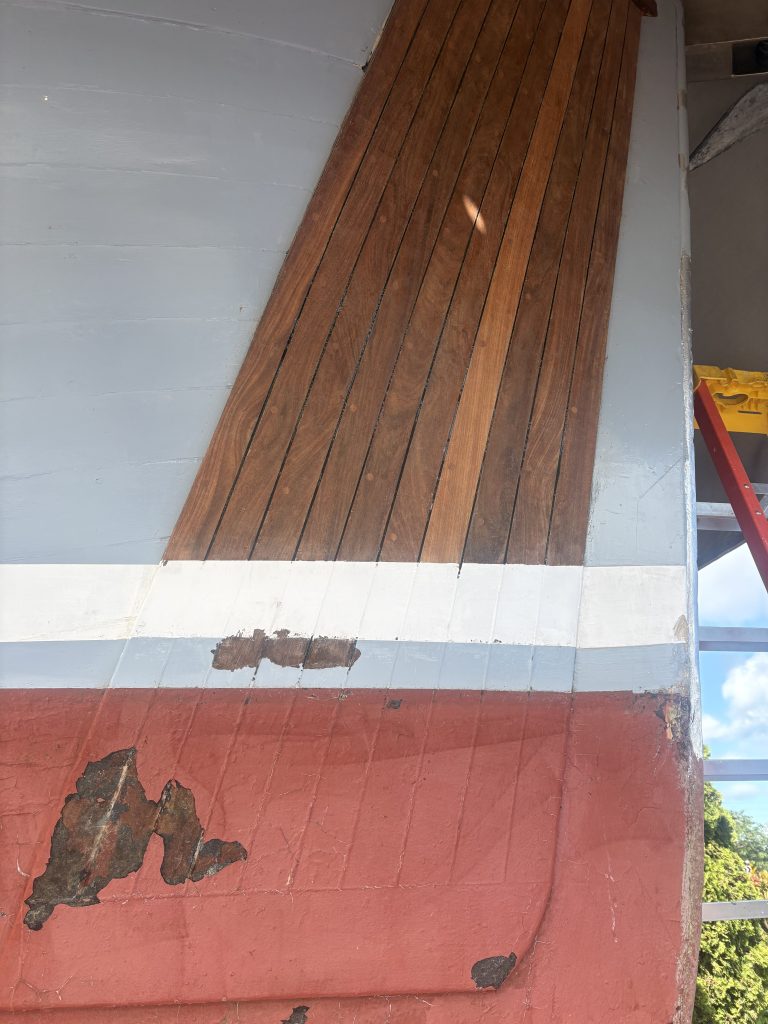
Take a look at the image above. As you can see, the planks extend down below the waterline. In rough waters, it’s easy to imagine the anchor being brought up and banging against the hull with mud or debris on it. Not a great place to gouge a hole in the boat! This past year, my 2021 panel refinishing job was starting to show breakthroughs at the black caulking seams. Varnish had begun to flake, and once that happens, breakaway starts and the panels begin to gray. While at Emerald Marine having other work done, I decided to completely strip them and refinish.
Stripping consists of heating each panel with a heat gun in 2″ squares and carefully scraping the finish off. Each panel measures 3.5′ by 8′ and took approximately 4 hours…on a ladder. Next time you stand on the ladder, imagine standing there for hours at a time. My calves reminded me of that position the following morning! Once I’d completed that I had a little discussion with Nicholas at Emerald: should I remove the white and gray boot stripe and bring the natural wood down to the waterline? We both decided to think on it overnight. The following morning, we both agreed that it was worth a shot. If it looked weird, I could always paint back over them.
Gumwood has often been a material of choice for anchor panels. It’s flexible, relatively tough, and oily. All this means that panels made from it can take a beating. I had always assumed that these were Gumwood panels. After having spoken with Nicholas- clearly better than I at identifying wood types- he suggested these were not Gumwood, but Ironbark. A type of Eucalyptus from Australia, Ironbark is highly resinous, flame resistant, and exceptionally dense. Nothing likes to eat it, and the sawdust made from it is actually poisonous. In a word: BADASS.
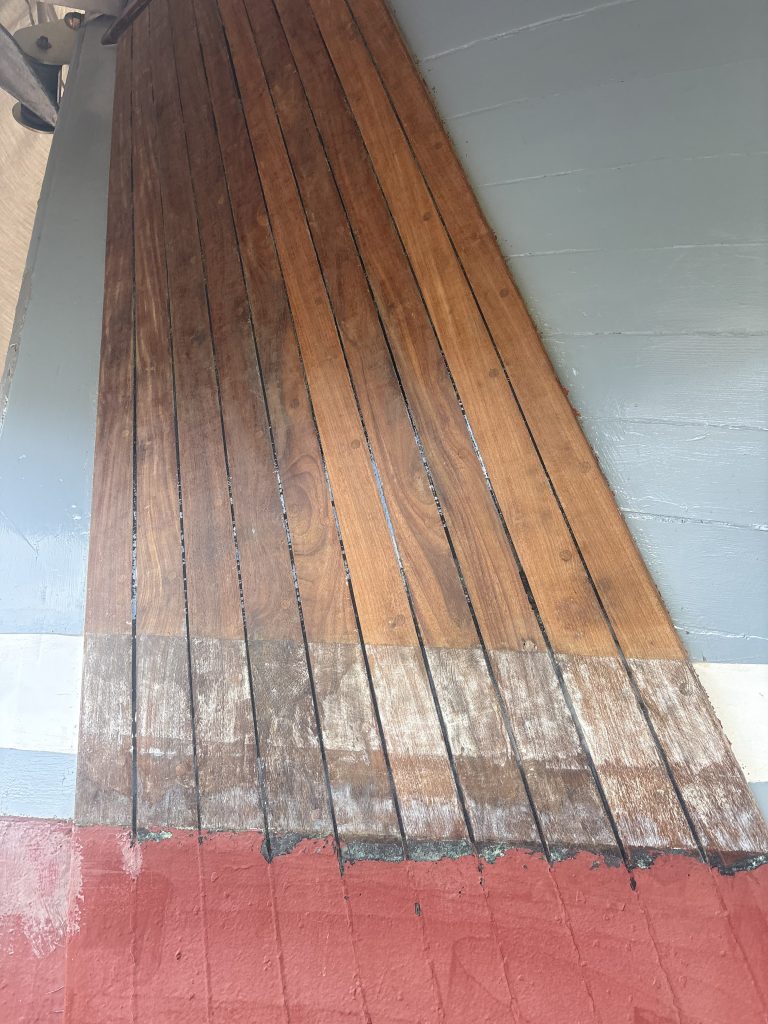
Armed with a powerful orbital sander, 80 grit paper, an N95 mask and safety glasses, I began the process of gently taking down the layers until I saw wood.
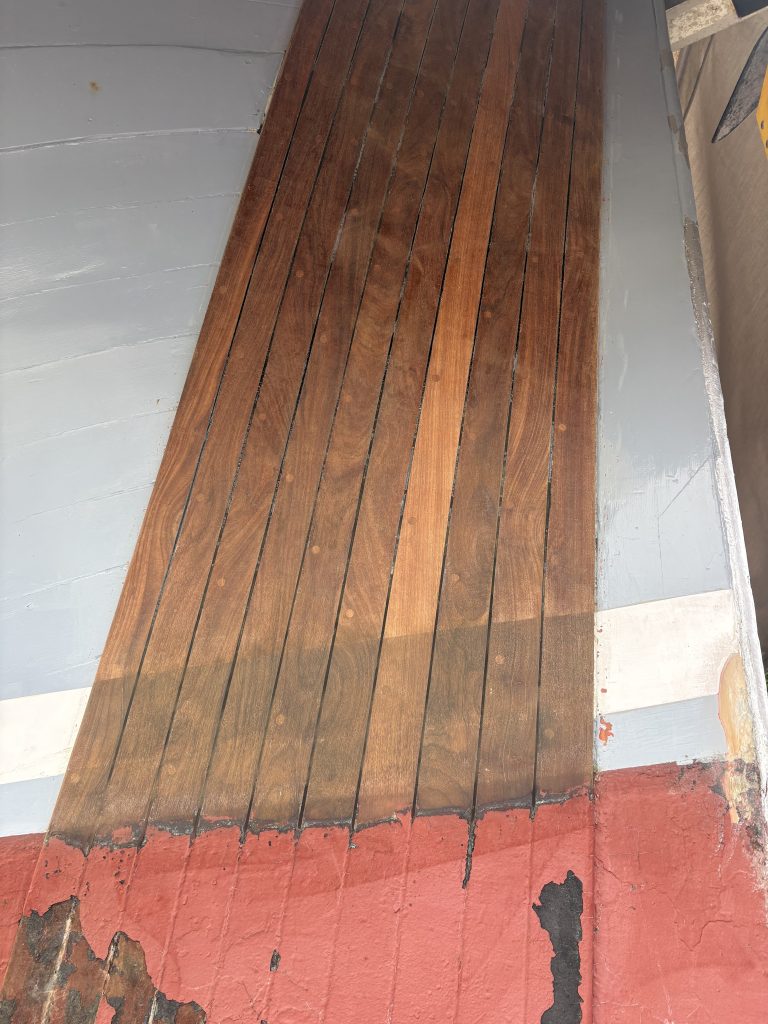
It was so exciting to see these panels free of paint. Of course, there was the temptation to take them all the way down through the bottom paint, but probably a bad idea, considering the waterborne growth that would occur over the varnish. As you can see in this picture, there’s a shadow. The uncovered wood is not faded; we both agreed that in one to two years, it would be unnoticeable. Once I’d completely sanded the panels smooth, the process of refinishing began. First coat was 85% Epifanes gloss varnish 15% thinner. Then came two coats of gloss Awlwood by Awlgrip, a powerful varnish alternative that is literally magic, in my opinion. Coats heavy and mostly without runs, fast set up time, and lasts a long, long time in the elements.
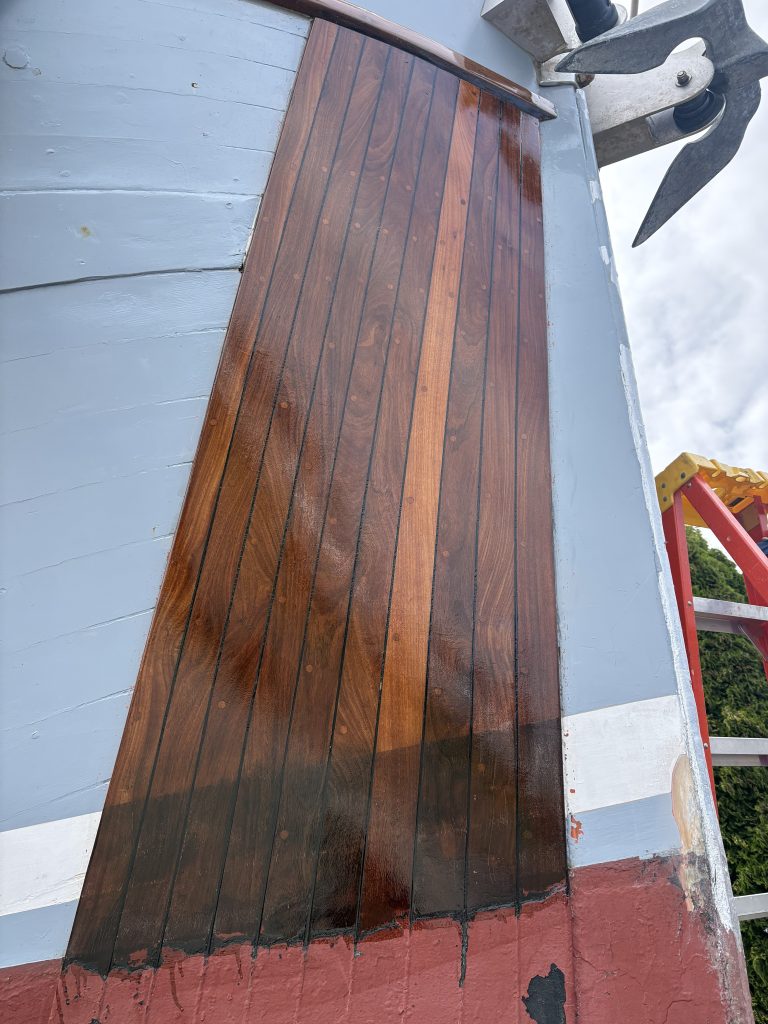
First coat of varnish shown above
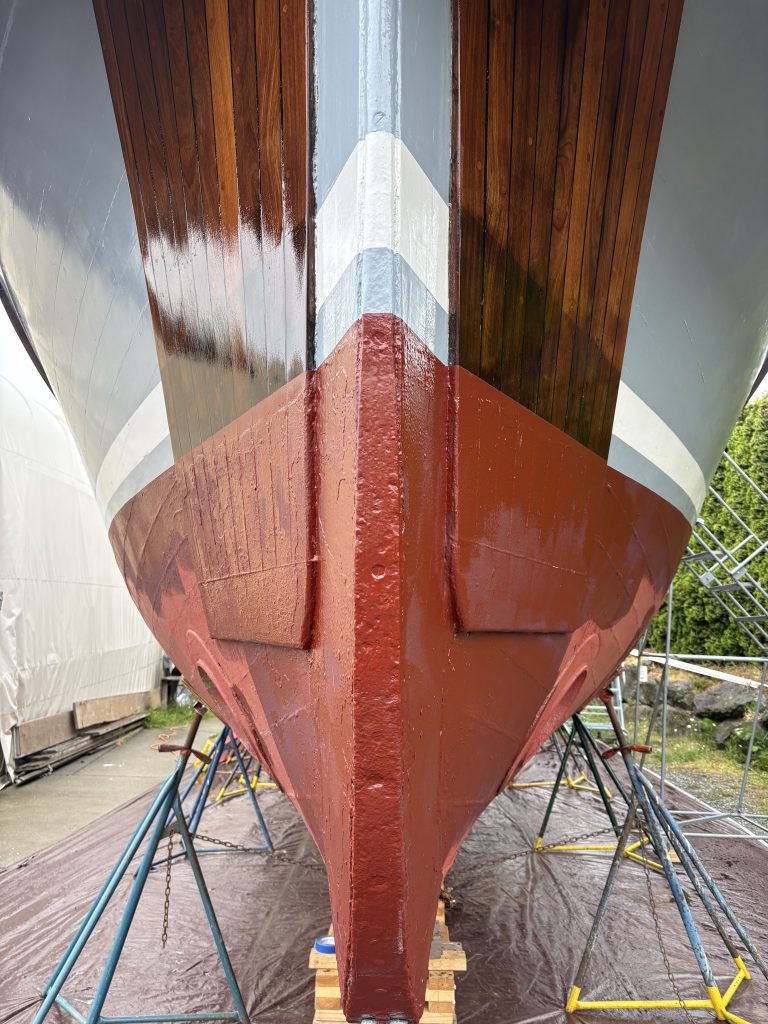
Complete- including double a bootstripe repaint that took over 200′ of masking tape. Next weekend is the annual Bell Harbor Classic Yacht festival on the Seattle waterfront, and I hope to get some feedback from the other boat owners about the change I made.