Cruising will inevitably reveal aspects of any boat that can be improved upon. I have discovered that I’m most comfortable- at least for now- sleeping in the forward bunk room. I can be up at the helm in a jiffy, the sounds at anchorage transmit nicely, and it’s just a bulkhead away from the engine room. The door between the spaces can be latched open. But after each trip I’ve been bringing the bedding home for laundering and thinking, “yeesh, I’m bathing in diesel!” Even after washing the sheets they would still would smell of engine-y bilge-y yuck.
My wife grew to hate that I slept in there. “You’re sleeping in a hazmat locker FFS!” (you figure that one out). I installed a CO detector at floor level in the bunk room. To no surprise, it would start squawking after a long cruise and , opening the hatch, I’d gone into the engine room to conduct shutdown and reset.
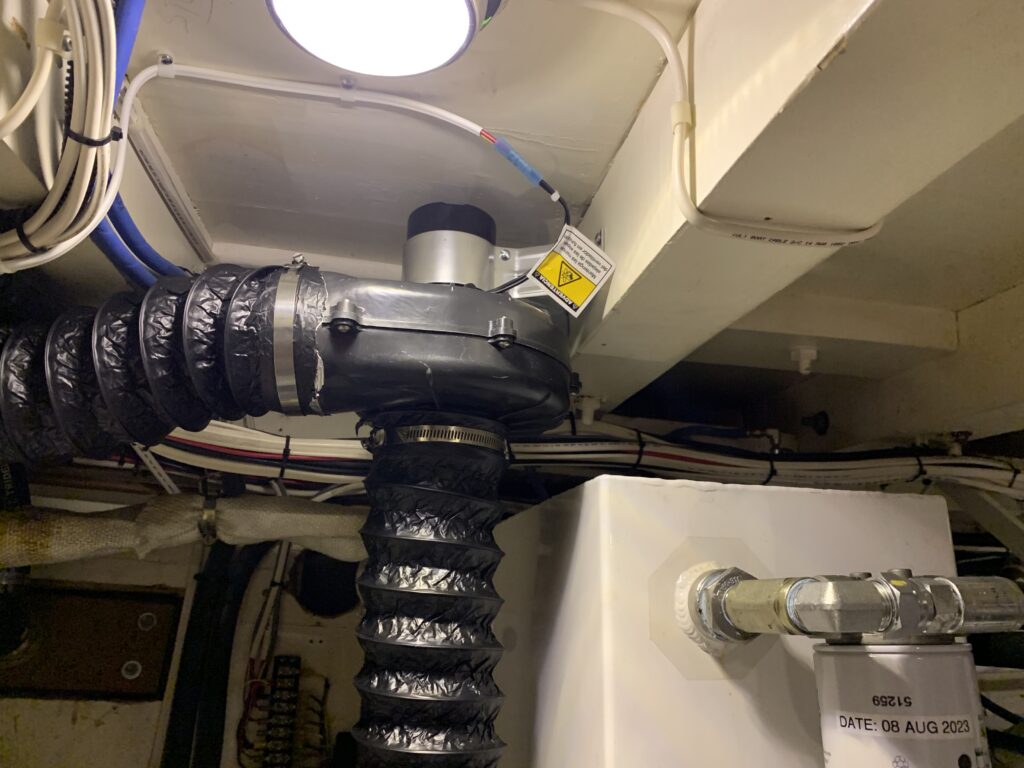
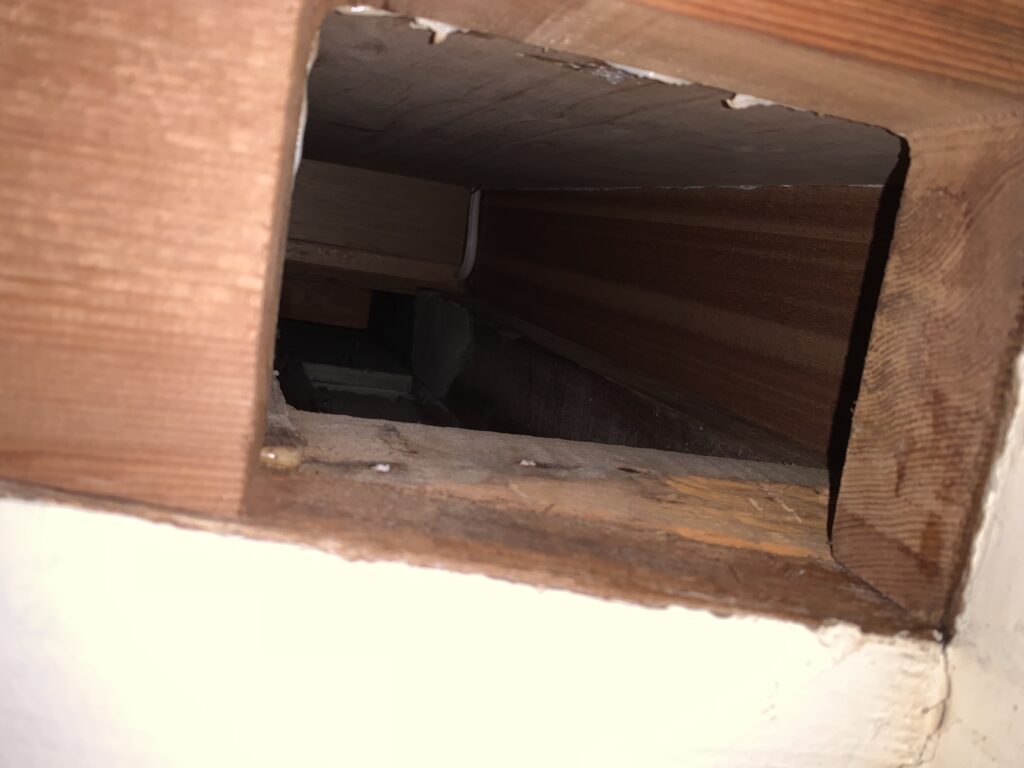
What to do? At the bottom of the ladder on a side bulkhead there were several holes drilled with a large keyhole bit. All of them disused, probably from previous equipment installations. Staring at those holes got me to thinking: both sides of the engine room have passive venting that goes to the upper decks (see above image, looking up). What about installing a blower?
Engine room blower fans are ABYC requirements in modern boats. They are an absolute necessity in gasoline-powered vessels, due to the volatile nature of gasoline. I guess no one thought about it in this old diesel fishing boat. It was time to start researching!
In the simplest terms: blower fans are either axial or centrifugal flow. They are also built for one of two duty cycles: intermittent or continuous. Intermittent fans last 500-1000 hours while continuous duty fans can range from 5000 to 10,000. There are fans that can move a modest 100 cu ft/minute all the way up to 10 kW monsters that move 500 cu meters/min. Assessing the space I have and the way in which we use Sandavore, I ended up purchasing a heavy duty Jabsco intermittent duty centrifugal fan with a 4″ hose.
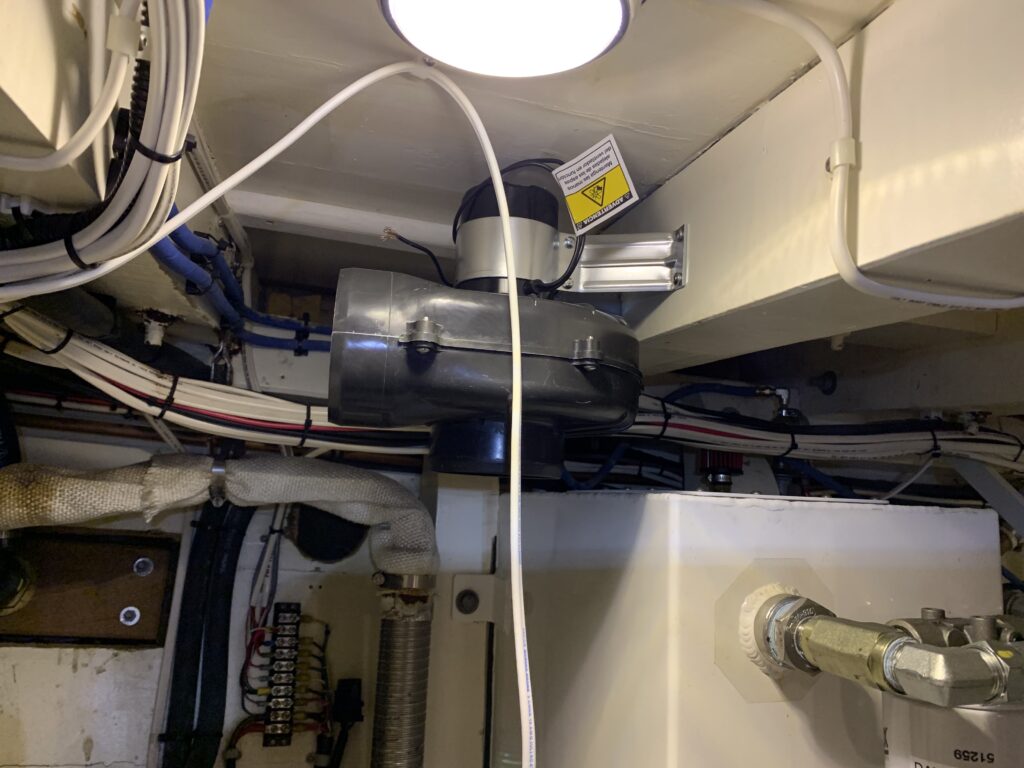
I discovered that it’s best to mount the fan well above the inlet and to limit the hose bends. The inlet should be as near to the engine room deck as possible but well above the bilge line; combusted gasses are more dense and sink relative to ambient air. The install process was slow but easy. Initial testing shows that the fan is quite noisy- so much for being advertised as “quiet running”. I intend to run the fan as we enter into the docking or anchoring phase; during longer trips when I have to perform engine room checks I’ll be able to flip it on & off. More to follow when we get underway next time….