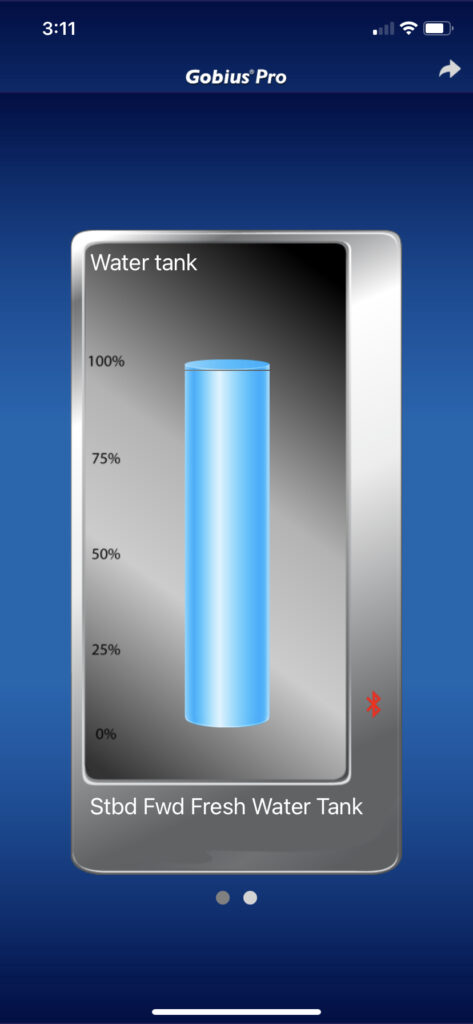
Time again to address the niggling issues that aren’t worth working on during the summer! This time we’re looking at fresh water and black water tank monitoring. Traditionally, marine tank volumes are determined by a device that is mechanically screwed into the top of the tank. It consists of an electrically powered sending unit that measures resistance or impedance, depending upon the design. In either event a probe is placed in the tank and sealed. There are also non-invasive tank monitors that rely upon capacitance, but the slightest corrosion between sensor and tank surface calls the reading into question. Some black water tank monitors are nothing more than a remote panel (usually near the toilet) that has a red light. When it illuminates, the black water tank is full.
Maybe I’m off, but I see a few problems with these designs. First, I don’t like the idea of drilling holes in a perfectly good tank. Sealants don’t last forever and probes fail. Second, it is super important to keep freshwater tanks absolutely clean. A contaminated water tank is misery to fully clean out, so limiting the # of bacterial entry points is critical. Third, what good is a black water tank minder if you’re sitting on the head and suddenly the light turns red? Um…..then what? Why should I have to guess the level of any tank?
Anders Meiton, of Gobius Sensor Technology AB, has developed a solution. Leave it up to the Scandanavians to develop a simplified answer to this 20th century problem! The Gobius Pro sensor system uses a proprietary technology to “see through” tank materials of nearly all types- including metals. It sounds like the sensor uses a sonic vibration and acceleromter to real-time calculate tank content relative to volume. The information is then transmitted via Bluetooth to an app. Extremely simple install, and very low (0.25 amp) draw. I ordered the two sensor kit and will place one on the black water tank and one on the starboard forward fresh water tank. I chose this particular fresh water tank because it is the one that drains most quickly. The system is expandable (up to 9 total sensors) so I could link every tank aboard, even the hydraulic system! Best of all Gobius encourages developers to create their own apps for customized monitoring solutions.
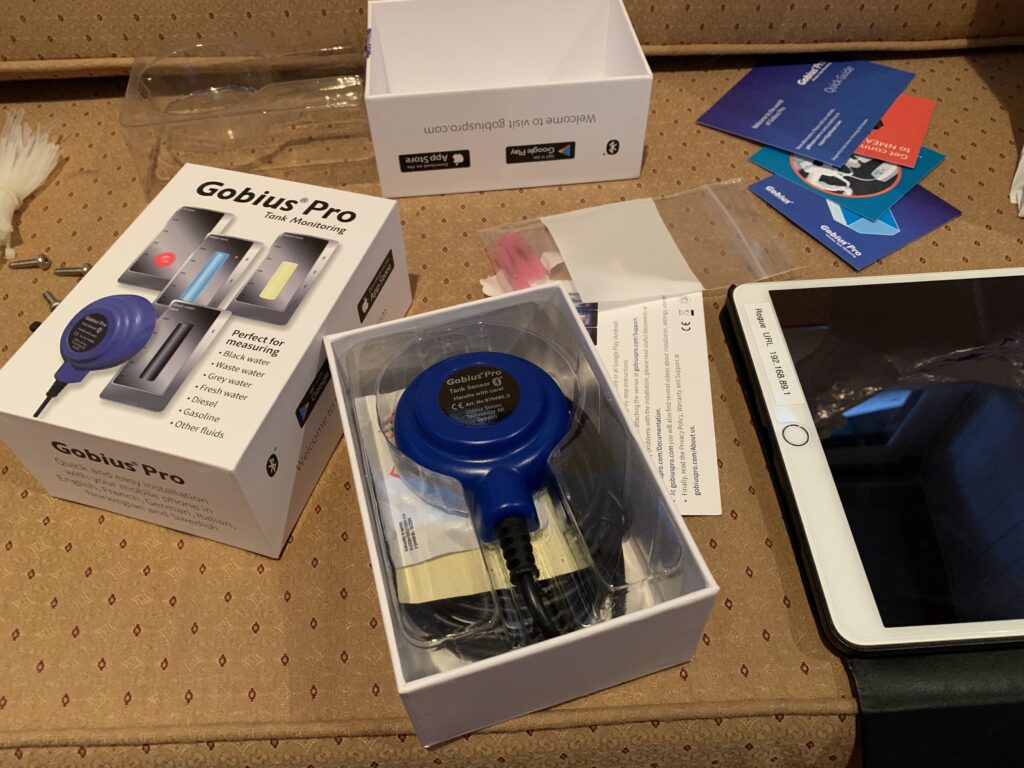
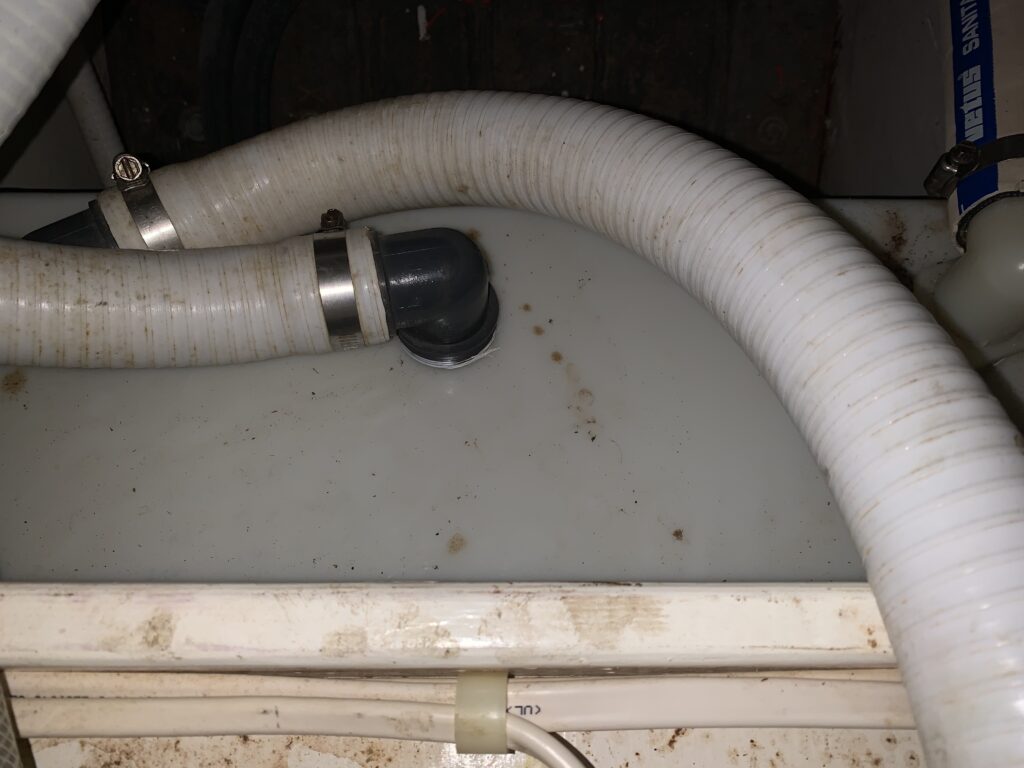
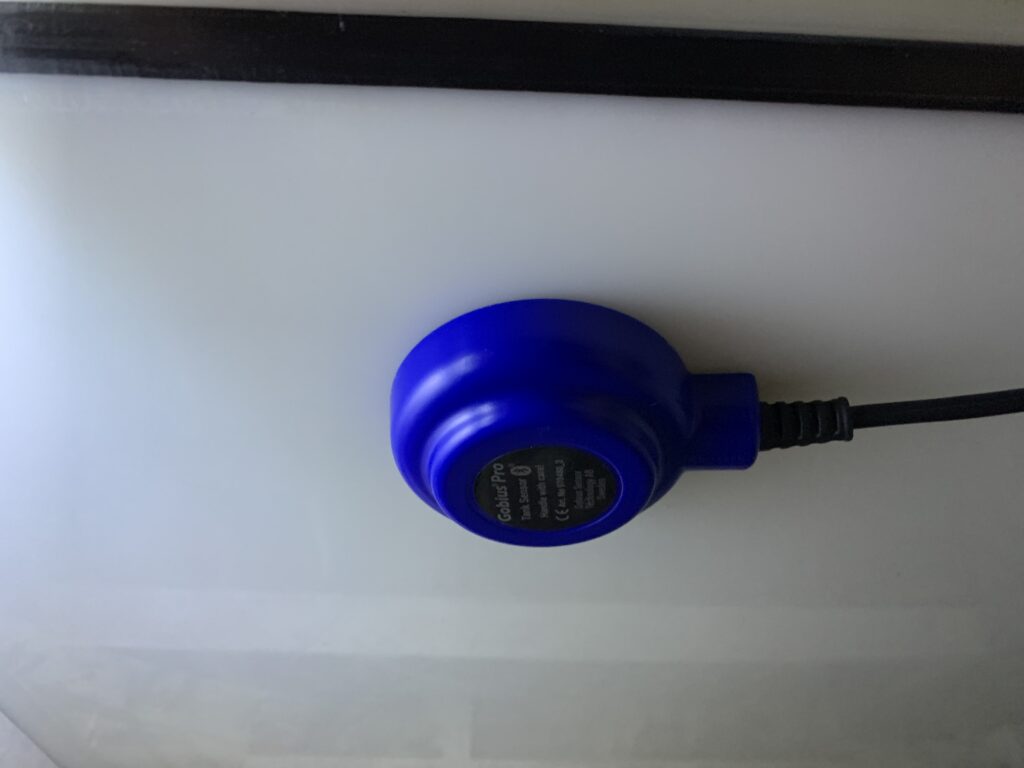
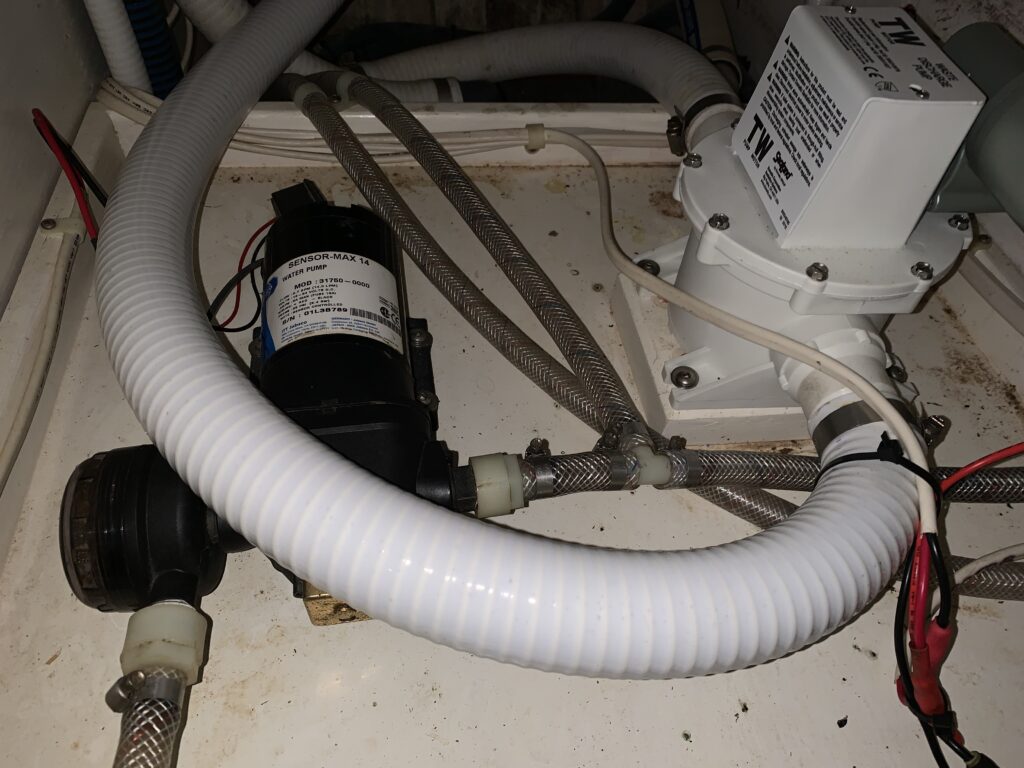
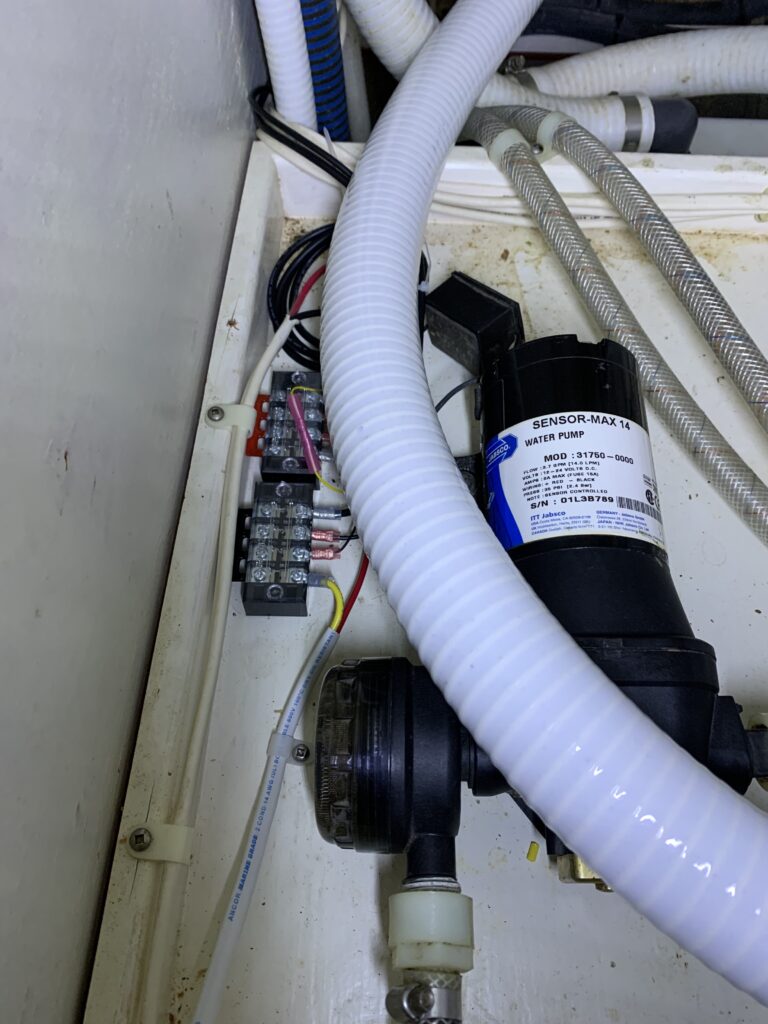
Wiring took the greatest amount of time; I wanted to be absolutely certain that the wiring was robust, within code, and all could be handled by the 15 amp fresh water pump circuit I place it on. Connecting to the app could not have been easier- I was done with both sensors in 2 minutes flat. This will be such a relief to have!