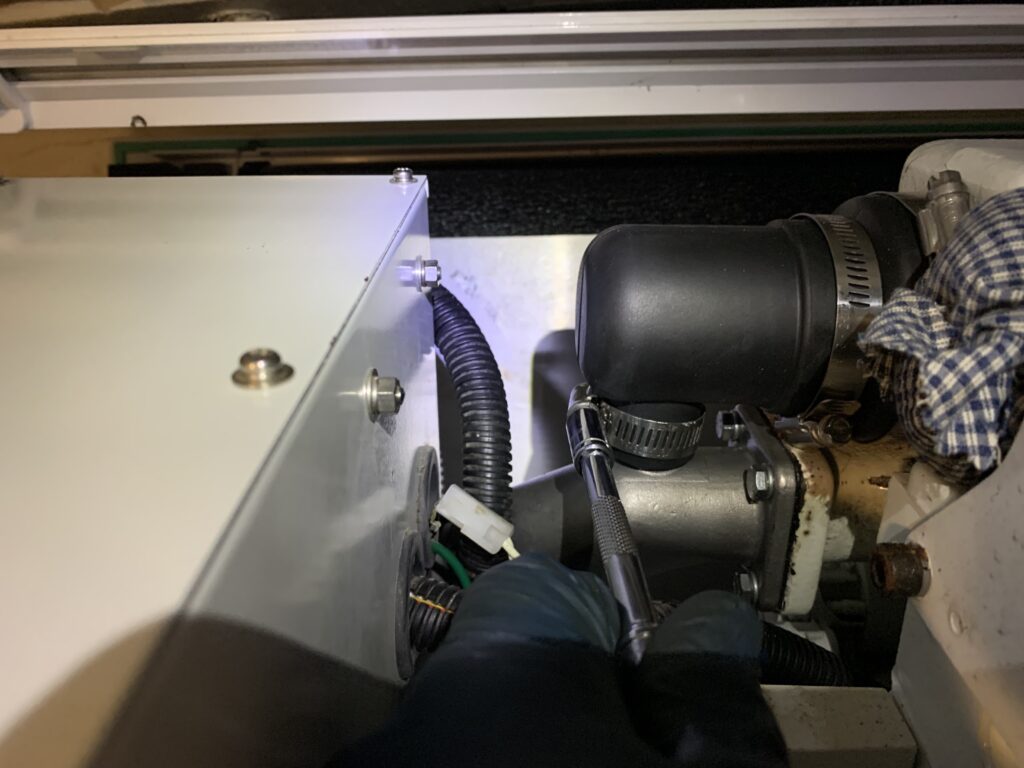
Years ago I learned from an insurance broker a disturbing fact:in his experience, something greater than 50% of recreational power boat fires originate at the onboard auxiliary generator. “In the course of ownership they are often just forgotten. The main engines are maintained because the trip won’t go without it. But the genset? Hit the switch and either it works or it doesn’t.”
We received Sandavore with a Northern Lights 6.5kW genset. NL is an extremely popular generator option and I can see why; they are robust, quiet, relatively easy to service, and parts are plentiful. According to the logbook the generator had 70 hours on it when she reached US waters- enough to bed the rings, run the generator to get the system synchronized with the rest of the electrical system, and that’s about it. The serial number indicates MY2008. The first time I did an oil change (in early 2020) the filter was OEM….the paint actually cracked slightly at the rubber gasket when I spun it off. That’s how unused it was. But disuse can be as bad as misuse, as I soon discovered.
Coupla days ago I realized it was time to replace the primary and secondary fuel filters. I opened up the soundproof side panel and- coolant?!? Red water was pooled in the s/s tray below the genset. The overflow bottle, which is normally 1/3 when cool, was full to the top. Somehow the generator engine was making coolant….
Impossible, you say. And you’re right. The engine cooling system on NL generators normally incorporates a heat exchanger, which operates on the same principle as a radiator, but with salt (or “raw”) water being run past the coolant in brass tubes. The only way the coolant quantity could be increasing? Raw water was mixing with the coolant under pressure. Which indeed was the case.
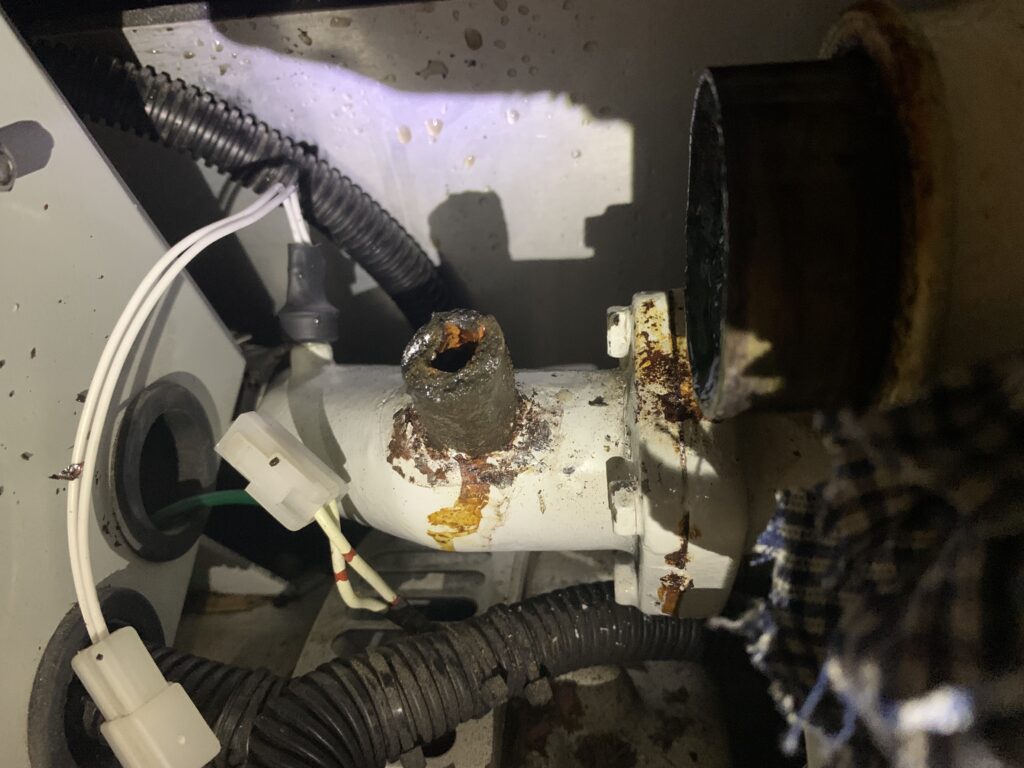
In the first image the hot raw water outlet shows the effects of anaerobic and electrochemical corrosion with the resultant accumulation of rust- to the point that the outlet is being choked off (recall that salt water corrodes about 5x faster than fresh water). Considering the power of the raw water pump, if the sufficient water couldn’t exit, it forced its way back into the heat exchanger core, where it had begun to mix with coolant. After groaning about this over dinner I knew it was time to remove the entire heat exchanger system to investigate.
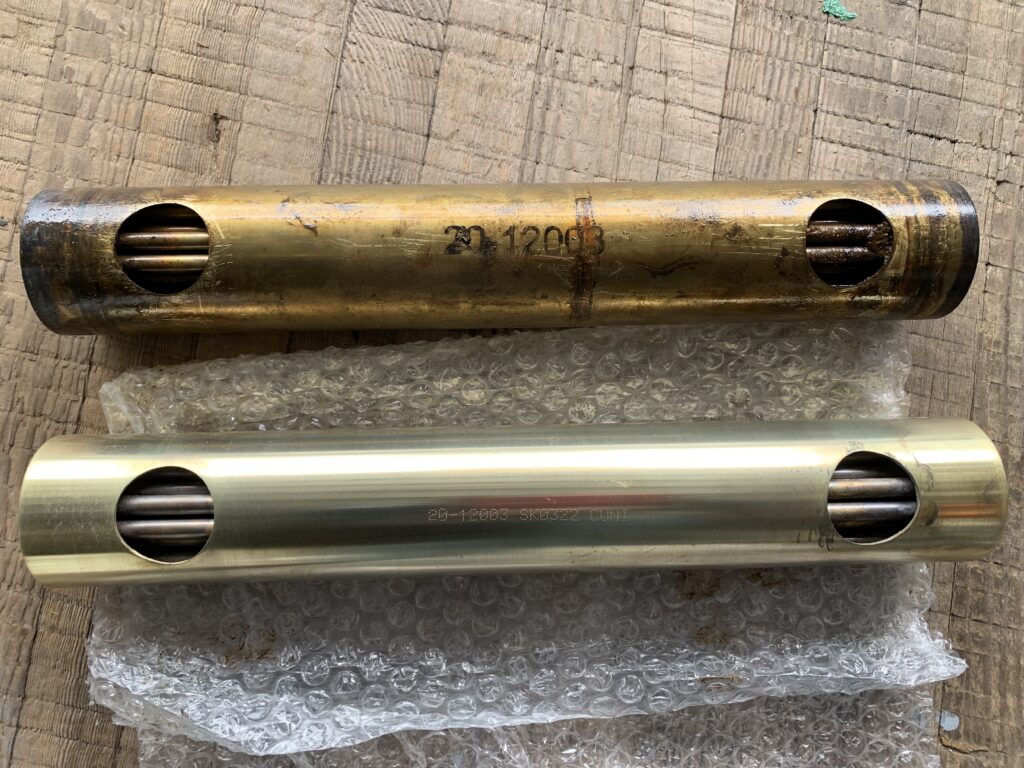
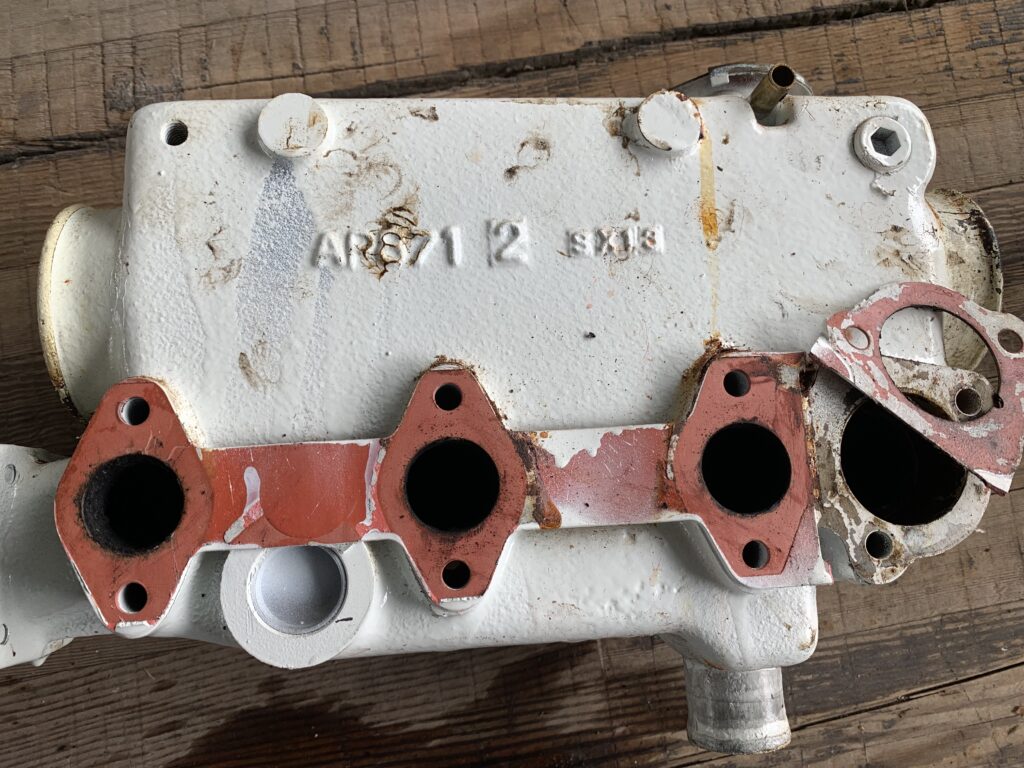
Upon removal the core showed evidence of calcification and salt water intrusion. However it was still in excellent condition, and after a getting boiled out and cleaned at the local radiator shop it will make a great spare. The exhaust elbow was shot. Subsequent to 2010 NL began to fit all heat exchanger-equipped gensets with stainless steel exhaust elbows…so I ordered one from HDI Marine in Vancouver, WA.
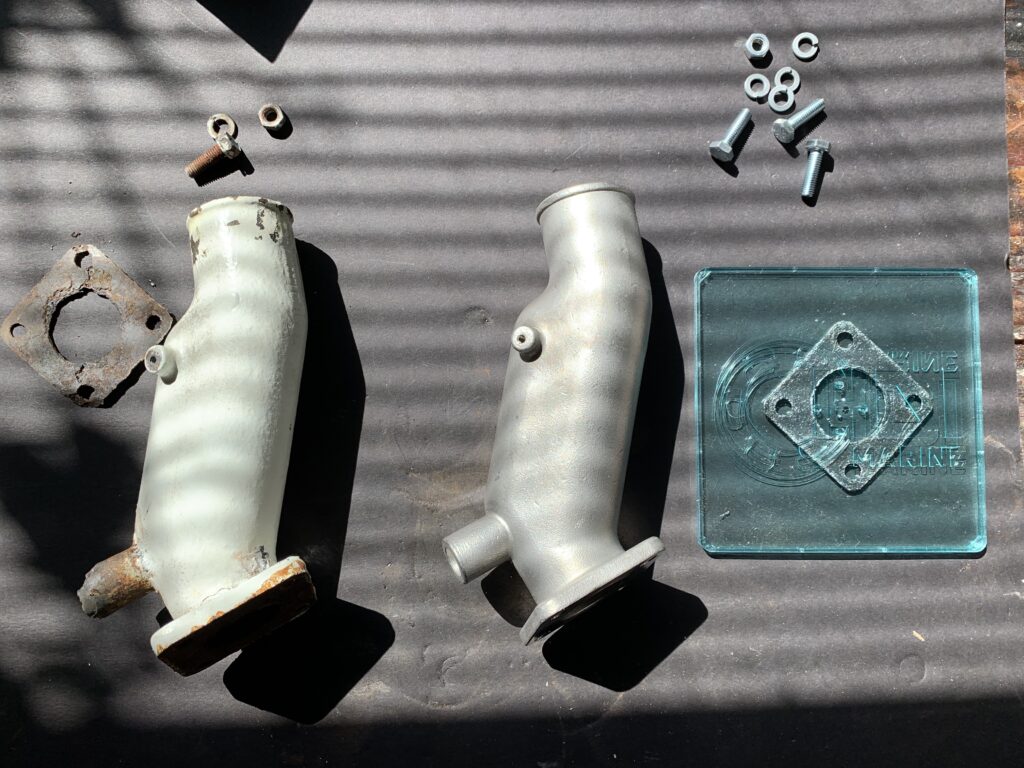
Three of the bolts connecting the elbow to the exhaust manifold came off nicely but the fourth one sheared off. On the bench at home I patiently drilled out the frozen stud then used a tap to get it re-threaded.
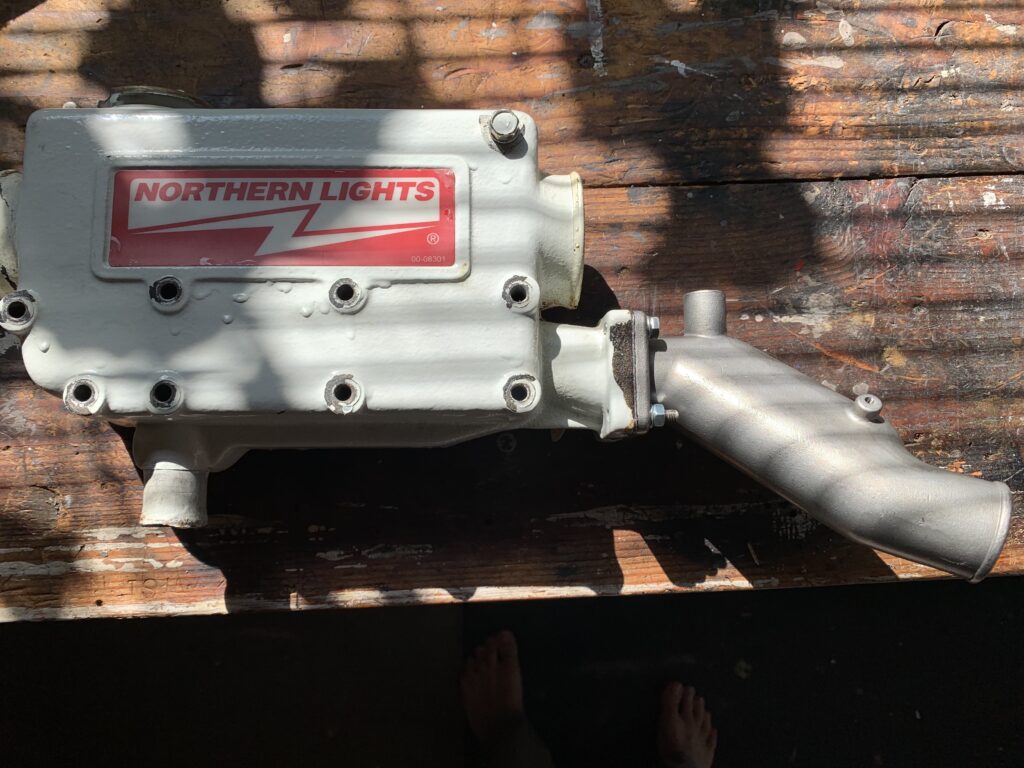
Like any good mechanic I looked for other “consumables” to replace now that I was this far into the project. The massive rubber boots that hold the heat exchanger in place, the thermostat, and the exhaust manifold gasket were all renewed. When installing the gasket I placed a very thin coat of copper-based anti-seize on the engine block side; rationale being that removing the gasket material from the manifold the next time would be FAR easier than bending over the far side of the engine block to do it. Not a job for the claustrophobic: I had to turn my head sideways to wedge it above the engine for every action. The came the complete manifold with a new thermostat, the new end cap boots, and reinstallation of all the connecting hoses. Once complete it was time to begin washing the cooling system free of salt. Adding a couple capfuls of Salt Away to a 2L bottle I carefully poured the contents into the heat exchanger, then started the generator. No leaks, ran it up to 160 deg F, then shut down and drained out the mixture. One more time with a small bit of Salt Away, then after running and draining that, I went to a 50/50 mix of heavy duty coolant. This time I ran the generator up to operating temp, which ended up being a full 20 degrees less than I’d normally seen (no surprise). No leaks and a few years of solid cooling service earned!