Near the end of the 2021 cruising season my wife reported that the fish hold (aft stateroom) was smelling bilgey. Our only head is located there, but so is the lowest point inside the hull (prop shaft support, gland, shower sump box, etc). There’s always some standing water in the aft bilge and packing glands are known to be funky (anaerobic bacteria). After decades of Navy flying I no longer have a very sensitive nose and therefore leave it up to her (and our daughter) to pick up on those things. Admission: I kinda blew her off at that point. There were several other pressing projects lining up (see previous blog) and this one got shifted down the list.
Among other winter items, I always check the fresh water pump operation and filter-strainer. In order to do that aboard Sandavore, one has to remove a set of drawers at the very forward end of the fish hold where two of the fresh water tanks, the blackwater tank, and a great deal of hose exists. As I shinnied my way into the opening I thought, “wow, it smells like crap in here!” And then my wife’s words smacked me in the head: hey dummy, it was probably past time to change out the blackwater hoses.
Sanitation hose is a consumable item, just like an oil filter. Their useful life depends upon frequency of head use and maintenance practices, however the most important factor is age. I suspect (though don’t know) that the blackwater hoses installed date from 2007- way past their useful life. The hose installed was Trident 148, which is probably the most commonly installed hose in the US and Canada. I’ve seen it in EVERY boat I’ve ever been aboard. It is also very thin-walled and not very long lasting; I’d say it should be replaced every 5 years. Doing some research I discovered that superior alternatives exist under the “you get what you pay for” phrase. I settled on some hose by Vetus . At 2.5x the price of the Trident I had hoped that it would be good quality- and I was not disappointed. The interior wall of the hose is extremely smooth, something very important to limiting bacterial adhesion. Comprised of three layers, it is quite heavy duty yet flexible.
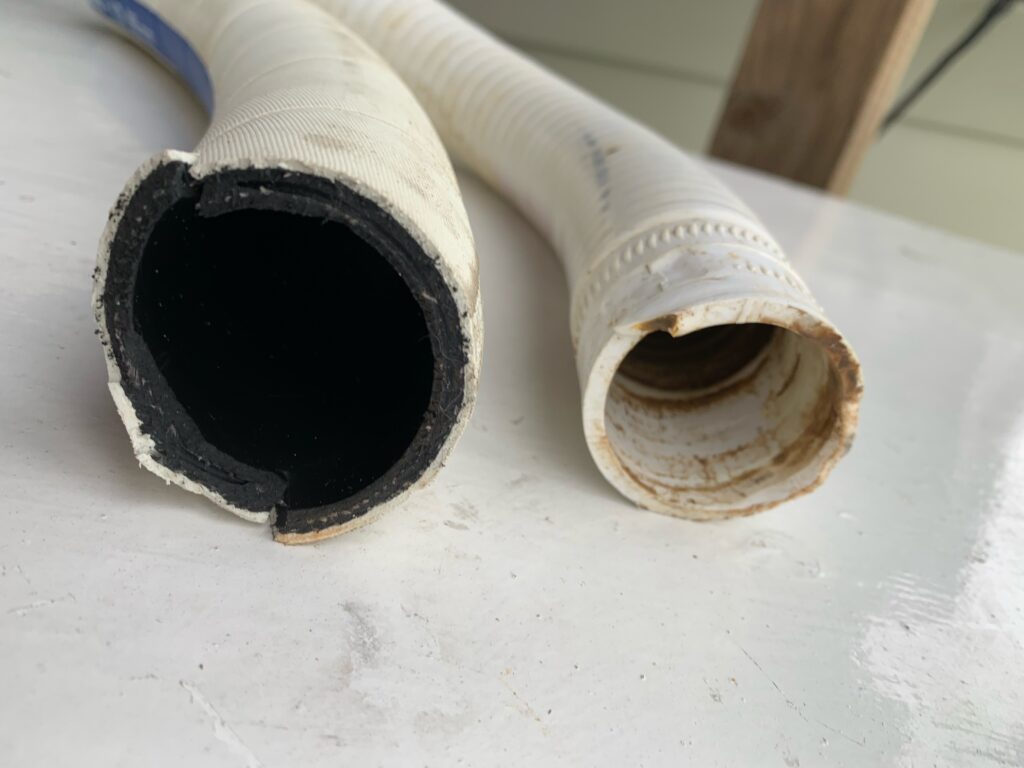
Swapping out blackwater hose is just….nasty. There’s no way around it. Even if the hose is completely empty (don’t count on it) I went through several pairs of disposable gloves. I also wore safety glasses, in case something…spattered. Snaking the hose through the port side void proved insanely difficult; the outside diameter (OD) of the Vetus line was another 5mm and the tolerance wasn’t there. Ended up having to hand file the opening larger.
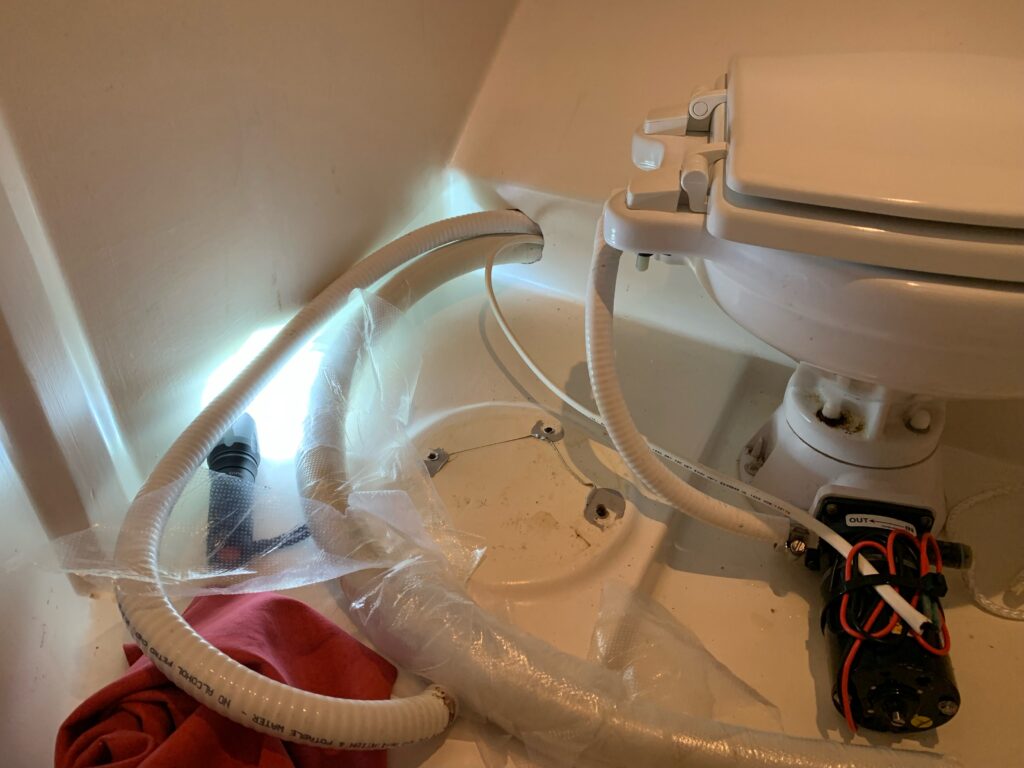
After the pain of swapping the 1″ line from the toilet to the Y valve, swapping the 1.5″ line from the Y valve to the blackwater tank was a breeze! Relatively. After I’d reinstalled the toilet and clean everything up, then pressure tested the system for leaks, I measured length of the next hose to replace: from the Y valve to overboard. Although we rarely use it, pumping blackwater overboard is legal in certain Canadian waters. Time will tell, but I think it already smells less. The experts will have to tell me!
12 January 2022 update: really, REALLY made a difference. No bilge smell whatsoever. Girls agree.