Like varnish, other types of deck finishes have a lifespan. Sandavore arrived in our hands having been finished with Sikkens Cetol Marine Satin, an old stalwart of the working boat industry. The 2007 applied finish (!) had succeeded in changing from “Satin” to “Quite Dull” by the time Spring 2021 came around, so I knew it was time to get going before it began experiencing breakthrough.
I reached out to a few friends to get opinions on moving forward. Cut to the quick: all agreed that Cetol was a decent and fine- if slightly flawed- deck coating. But ALL coatings are flawed in some way or another….
Disadvantages first: it doesn’t have the flow characteristics of varnish or AwlGrip. It is expensive; it comes in Satin or Gloss, and is tinted a golden color; it doesn’t sand well; the word “Satin” should be taken artistically- more like “Gloss Minus”.
Advantages: Cetol apparently lasts a long time- possibly longer than varnish, as it applies thicker; takes only 2 coats; hardens flexible, even at cold temperatures, and stays that way for years (very important on decks with rubber caulked seams); golden tint works very well for Sandavore’s fir decks; it isn’t a nasty biohazard like AwlGrip; able to apply in open air environments without carbon filter masking.
Prep work was tedious but easy, scuffing mostly and the occasional 320 block sander to remove paint flecks and contaminants from the last coating. I vacuumed the surface, used a tack cloth to pick up the residue, then armed with a very nice 2 1/2″ pointed brush began the long, slow process of coating each strip, foredecks first. The brush almost PERFECTLY fit the 2 1/2″ fir deck stripping! Q tips worked well to quickly remove the wet overrun on the caulk (which would have eventually begun to crack apart on the black rubber, otherwise).
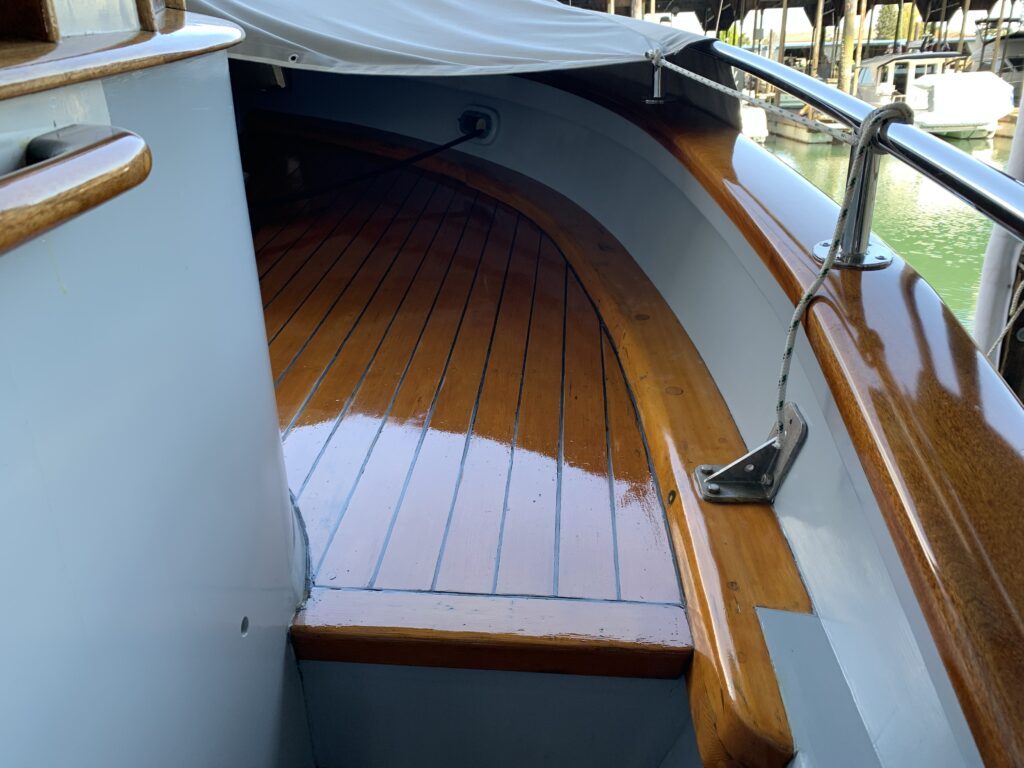
The entire process took about 20 hours for two coats. Mistakes were made! But cetol is a forgiving product, so remediation was very easy. Now to see how long it lasts. I expect 3 years or so.